Showing posts with label 1940s. Show all posts

Monday, 19 August 2024

Q&A: Jane Rogers interviews Lesley Glaister about her new novel, A PARTICULAR MAN


"I always like to be utterly certain of each character’s motivation at any one time – even if they aren’t sure of it themselves ..."

Lesley Glaister has written numerous novels, as well as short stories, drama and poetry. Alongside her writing she has worked as a tutor and mentor in Creative Writing in settings ranging from Crete to The University of St Andrews. Her most recent novel, A Particular Man, is set in the 1940s, and looks at love, marriage and sexuality in the post-war period. Find out more on her website.

Jane Rogers: Congratulations on your 14th (??) novel, Lesley! It’s a completely engrossing read, and your characters continue to haunt me, especially Starling and Aida, that unlikely couple who almost certainly will not live happily ever after.

My first question is probably foolish, but I found myself puzzling over whether the ‘particular man’ of the title was Starling, or the absent Edgar?

Lesley Glaister: Thank you, Jane. It’s my 16th or 17th novel, depending on whether you count my YA novel, Aphra’s Child. The title: A Particular Man, came late. I had several other working titles including A Hole in the Corner Affair – but no-one else seemed to like that!  A Particular Man jumped into my mind while I was washing up one evening and it immediately felt right. It has both the meanings that you suggest. Starling is a particular man, of course, and he’s the particular man Aida falls in love with. But in a larger sense, the particular man who drives the whole dynamic of the novel is the absent Edgar.

JR: Speaking of Edgar - one of the things I love in the book is that everyone has their own story and secrets; Clem’s affair with famous artist Corin; Starling’s forbidden homosexual love for Edgar; Aida’s attraction to Starling which she tries to blot out by getting engaged to Neville. But the link between all the characters is Edgar, as son, as brother, as beloved comrade. And he is dead, and remains a total mystery. We have no idea if he returned Starling’s love, and even Starling doesn’t know. What made you decide to keep such a key character blank?

LG: Ha, good question! It wasn’t a decision. When I set out to write this novel, which has connections with Blasted Things, set twenty-five years earlier, I intended that Edgar, who was an infant in that novel, should be a central character. I kept trying to write scenes for him but he remained stubbornly inanimate. I couldn’t breathe life into him, or see him or hear him, and eventually I realised he was dead. For me writing is full of discoveries like this, rather than decisions. But I did decide to leave ambiguous the question of whether Starling’s love might have been requited if Edgar had lived. I think it would or might have been, but Edgar died so, like Starling, we will never know. 

JR: Your writing is wonderfully vivid, transporting the reader instantly into the scenes and characters’ feelings you describe. Here’s an example taken at random:

Aida hurries out of the hammering rain into the puddled shelter of St Pancras. As arranged, he’s waiting outside W H Smith, and her heart jerks like a bad dog on a lead.

How much revision does it take to achieve this kind of economy and joyous precision?

LG: Thank you! That is a huge compliment coming from a writer of your calibre. The honest answer is that those kind of similes and metaphors just seem to come naturally. Like many writers (and, of course, many people who aren’t writers) I tend to think in metaphor most of the time. Sometimes I drive myself mad with my habit of always thinking things are like this or that other thing. I have to work much harder at revising other elements of the narrative though: scenes where people have to move and act, dialogue, shifts through time etc. I always cut huge swathes in the editing process, and hone and sharpen scenes to try and rid them of any flab. I always like to be utterly certain of each character’s motivation at any one time – even if they aren’t sure of it themselves. 

JR: The novel is set in 1946 and also refers back to the war years and to the experiences of prisoners of war in Singapore. You don’t acknowledge any sources, but I’m guessing you did a huge amount of research, because the post-war world you conjure feels totally authentic. The menus are a particular delight (lobster mayonnaise and chocolate meringue!) and there are lots of details which are new to me, e.g. the choice of demob suits offered to ex-servicemen.  Can you tell us a bit about researching the background?

LG: One of my main sources was a box of family memorabilia. This includes photographs, letters, and artefacts relating to my father and his family. My dad was a Far East Prisoner of War in World War 2, a fact that was never spoken about in our family while he was alive. It was only after his death that I became fascinated both by his experience and the silence that surrounded it. In 1994 I wrote a novel called Easy Peasy, which is about that silence within a family.  At the time I did a fair amount of research, met a friend of my father from his time in Burma, read letters and newsletters written at the time. The tobacco tin of sketches in A Particular Man, was a real thing, though in real life it was a secret diary written on minute scraps of paper, also wrecked by a trapped ant. I find this idea very resonant. A letter from Edgar that Aida reads out loud to her mother is, in part, a letter that my father sent his mother when he was on his voyage to Singapore. There were also letters from my dad’s sister Kitty, who was killed during the Blitz and I was keeping her in mind for the character of Aida – though of course I never knew her.

As well as this family research, I also read reams of fiction set (and preferably written) during or shortly after the war as well as social histories. I watched films and TV documentaries and visited the Imperial War Museum. From all of these sources, I magpied away details of everyday life, such as those you mentioned, and the vocabulary of the times too. And of course I spent a lot of time Googling!

JR: I very much enjoyed the unsent letters from Aida to Starling. It’s a clever way of letting the reader into her thoughts. You also have Starling’s diary entries to reveal his inner feelings. But the larger part of the novel is written in the third person, from the restricted points of view of Aida, Starling and Clementine. How did you arrive at that writerly choice?

LG: Point of View is one of my obsessions and that close third person viewpoint is my favourite position from which to write. It means there is as little of the narrator showing as possible and all the narrative is filtered through the consciousness of the character in question. Sometimes, because of this restriction, it can be frustrating. For instance, I might think up just the right word, or image, but know that it wouldn’t be in the character’s vocabulary, or experience. With each novel I write I tend to wait for the first inklings of a voice to arrive. If it arrives in first person, I’ll go with that. The novel I’m writing at the moment, which spins off in an unusual direction from this one, is in the first person. One point of view I haven’t attempted yet is an omniscient third person – it simply looks too hard to control. I enjoyed using the first person for the letters and diaries and found it gave me extra insight into the characters of Starling and Aida. It was also a way of getting through a great deal of story in a reasonably economical way. 

 JR: How difficult was it to write using the point of view of a gay man in 1946?

LG: Oddly, I didn’t find it hard at all. I did a fair amount of reading including from a book called Curing Queers: Mental Nurses and Their Patients 1935-74 by Tommy Dickinson, which was excellent. I also did a lot of Googling and I was careful to run it past a gay male reader to ensure I hadn’t made any real howlers. 

 JR: And, leading on from that question, where do you stand on the whole vexed issue of appropriation? Do you think it’s OK for writers to write about people from different cultural/racial/social backgrounds to their own?

LG: Yes I do!  Of course, if a writer pretends to be something they’re not in order to write from a particular viewpoint, that’s wrong. If a writer writes cruelly or inaccurately or causes any hurt from their writing, that’s wrong too. But I can’t see why any human being can’t sensitively and intuitively try to enter into the experience of any other. Surely that’s part of what creative writing is about?

JR: I know this novel was originally slated to be published by Sandstone, and that Sandstone then went into receivership. Can you tell us about the bumpy road to publication?

LG: A miserable tale!  It’s so hard to get a novel published these days unless one is already a best-seller or a new writer on the brink of being discovered. For those of us that have published several (or many) novels, none of which have won a major prize, or been turned into a major movie (or maybe even if they have) publishers just aren’t interested. We are quite simply, out of fashion. This is true in my experience of the major traditional publishers, at least. Fortunately, there are smaller independent publishers – Sandstone was one – which work on a similar model but have more regard for quality rather than simply profitability. Sandstone published Blasted Things and I’d signed a contract with them for A Particular Man before they went into liquidation. I was left rather in the wilderness until Bloodhound came to my rescue. They differ from traditional publishers in being more focused on selling digital and audio copies than hard copies of books, though they do produce these too. I am very grateful that they have not only published A Particular Man but will also be reissuing Blasted Things later this year.

 JR: Finally – the limericks! They are great fun. Are they all your own work? I knew you were a poet, but I didn’t know you had a talent for limericks!

LG: They were fun to do. I sometimes think of limericks when I’m out walking my dog – it seems to suit the rhythm of my walking. Sometimes that rhythm drives me nuts. Most of the ones in the novel are my own, though one is adapted from someone else’s and the one that Peter quotes to Starling towards the end is, as he says, ‘an old chestnut’.

Thanks for these lovely questions. You have really made me think!

JR: Thank you for your generous answers, and for a fascinating novel! I think I like it even more now I know how closely it is based on your own family’s experiences. 

A Particular Man is published by Bloodhound Books.

Jane Rogers' review choices for Writers Review:

How the One Armed Sister Sweeps her House by Cherie Jones


Home Fire by Kamila Shamsie


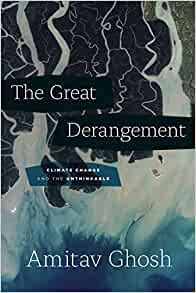
The Great Derangement by Amitav Ghosh

On dramatising No Longer at Ease by Chinua Achebe


Jane's dramatisation of Clear Light of Day by Anita Desai, about one family's troubles during the partition of India in 1946, is currently on Radio 4. Listen here to the first of two parts.

Monday, 17 April 2023

Guest review by Helena Pielichaty: THE LAST BOAT OUT OF SHANGHAI by Helen Zia


"The broken paths are still being trodden, not mended. That is why stories like this are so important and need to be told."

Helena Pielichaty
is a children’s writer. She has had over thirty books published, mainly by Oxford University Press and Walker Books. More on her website. 

Although there have been other works set around Shanghai during the turbulent 1930s-1950s, such as J G Ballard’s Empire of the Sun (1984) and Lilane Willens’ Stateless in Shanghai (2010), Helen Zia is the first to tell the story from a Chinese perspective. During an interview following the publication of Last Boat Out of Shanghai, the Chinese-American author, academic and activist declared: ‘There isn’t a single book in English about this; not even a dissertation.’

By ‘this’ she means what she calls ‘the forgotten exodus’ when, during the late 1940s, Shanghai became the epicentre for tens of thousands of people fleeing both the city and Chairman Mao Tse-Tung’s Communist regime. The book is the result of twelve years of meticulous research, including hundreds of hours of interviews with survivors, most of whom were in their seventies and eighties by then.

It is divided into four parts: ‘The Drumbeat of War’ (covering 1937), ‘Childhood under Siege’ (1939-1947) ‘Exodus’ (1948-1949) and ‘War’s Long Shadow’ (1949 -1957). Zia focuses on four of the interviewees: Benny Pan, Ho Chow, Bing Woo and Annabel Annuo Liu, beginning in 1937 when the Japanese took control of parts of Shanghai by force. Like all good non-fiction, Last Boat Out of Shanghai reads like fiction; and gripping fiction at that.

We are introduced first to Benny, a nine-year old boy with ‘unruly black hair, his knee socks bunched at the ankles.’ Benny is the favoured son of social-climbing parents, who, thanks to his father’s connections as an officer in the police auxiliary, enjoy a comfortable life-style. Like Jim in Ballard’s Empire of the Sun, Benny has learned to cycle past the dilapidated shacks and squalid tenements ‘reeking of raw sewage’ and to look the other way if he sees a dead body.

Next, we meet Ho, an earnest 13-year-old: ‘lanky, bedraggled and bewildered’ who has accompanied his grandmother to the ‘safety’ of the city, mistakenly thinking, like many others, that Shanghai, with its foreign concessions populated by Americans, British, French, Russian Jews and - since 1941 - German Jews, would offer protection. On Ho’s shoulders rests the fate of his family’s future; he must not let them down.

Then we have eight-year-old ‘Bing’ formerly known as ‘Little Sister’ before her poverty-stricken father sold her two years earlier. She was re-named Bing by her new ‘Mama’, whom she had grown to love but who now appears to have deserted her, just like Baba had. A new home beckons in Shanghai with a different ‘mama’ - Miss Woo - and Miss Woo’s foul-tempered mother. Numbly, Bing awaits her fate.

Finally, there is Annuo, barely two years old. Annuo has a big brother, Charley, who swears to protect her from the incessant bombs, and a doting mother who is a trained physician. Of her father, Yongchio, away fighting for the Republic of China’s Nationalist Party, she is less certain. She senses he has an antipathy towards her for some reason and she is right. This antipathy grows as Annuo does; Yongchio’s anger flaring at every perceived wrong doing and any spark of independence.

Zia follows these four people’s shared histories for two decades. I learned so much about Chinese and Shanghai's culture, family hierarchies, food, the vibrant street life, and the volatile politics. Yet one of the hardest parts to read about is the period during the 1950s, when, having witnessed so much cruelty and overcome all kinds of odds to reach safety, Benny, Bing, Ho and Annuo then have to endure further hostility in their new countries. Those bound for America, especially, arrive at a time when Senator McCarthy’s ‘Reds under the Beds’ hysteria had whipped up suspicion and prejudice against any Chinese refugee, regardless of their background and political affiliations.

In the epilogue Zia concludes ‘…If told often enough, one day such stories may become lessons for historical reflection, not broken paths to be retrod.’ I’d like to think so, too, but given what happened during a recent, similar ‘exodus’ – that of Afghans fleeing the Taliban in 2021 - the broken paths are still being trodden, not mended. That is why stories like this are so important and need to be told.

The Last Boat out of Shanghai is published by Ballantine Books.

Monday, 5 December 2022

Guest review by Keren David: DAUGHTERS OF THE LABYRINTH by Ruth Padel


"In an age of Holocaust fiction which is often sentimental and offers a false narrative of hope, this book gets it right again and again."

Keren David 
Keren David is the author of 13 books for teenagers. Her latest is Say No to the Dress (Barrington Stoke). She is also editor of the Jewish Chronicle's JC2 arts and lifestyle section. 

“It is a small peaceful hall, full of silence, glinting with textiles in deep earth-colours like a rusty rainbow, amethyst, chocolate, burgundy. White arches. A sheaf of open doors through which I see a patch of garden. Light filters down from high windows onto polished benches glimmering with embroidered cushions. On the left is a wood panel hung with taffeta of smoky topaz. Rose-brown silk lies lightly over a large book open on a lectern.” 

The description is of the Etz Hayyim (‘Tree of Life’) synagogue in Chania, Crete, and it comes from Ruth Padel’s novel Daughters of the Labyrinth which was published in 2021. I visited the synagogue this year - a tiny building tucked away in a corner of the maze of streets and alleyways which were once the port’s Jewish quarter. An exhibition at the synagogue tells the story of the Jewish community, which had lived there for thousands of years, until the Nazis invaded. Rounded up and imprisoned, the Jews of Chania died when they were put onto a ship to be taken to the death camps. A British torpedo, fired in the belief that the ship was carrying munitions, killed them all. The synagogue was neglected and despoiled, but in later years restored, despite several arson attacks.  

I found Daughters of the Labyrinth in the synagogue’s bookshop and spent the rest of our week in Crete reading it. Undoubtedly the effect of the book was enhanced by my surroundings – there is something very special about being able to compare a writer’s descriptions with the places around you. But I think the emotional impact of the story - which moved me to tears several times - and my admiration for the writing and the authenticity with which Padel writes would have been the same wherever in the world I was. And in fact the book begins and ends in the part of north London where I live, and right at the end Ri, the protagonist, visits the synagogue which I belong to. Ri is an artist, from Crete but living in London, recently widowed and adjusting to life alone. One of the many joys of the book is the way Padel thinks and writes about art, and the artist’s eye that Ri beings to her descriptions. She is planning a trip to India to paint, but a call comes from her family in Crete – her mother is ill. So she returns to Chania where her mother asks a question which changes everything she thought she knew about her family and her history. “Will you say kaddish for me?”  

Kaddish is the prayer that Jewish mourners say for their loved ones (and indeed, in that tiny, restored synagogue in Chania, I said kaddish for my mother). But Ri’s mother, as far as she knows, is not Jewish. While her mother lies ill in the hospital Ri asks her father what on earth her mother means. And slowly a story unfolds – of heroism, tragedy and a girl who had to hide who she was, a Sara who became Sophia in order to survive and live with the huge trauma of being the lone survivor of her family and her community.  

The pictures that Padel paints, of the lost Jewish community, the Cretan world around them, of Chania in the 1940s and now, of post Brexit Britain, of a world in the grip of Covid, all ring true. Padel’s deep knowledge of Greek mythology underpins the story and so does her 13 years of research. In an age of Holocaust fiction which is often sentimental and offers a false narrative of hope, this book gets it right again and again. Padel is better known as a poet and an academic, this is only her second novel. I will be seeking out her first, and also her poetry and non-fiction. If you are looking for a book which is satisfying on every level, I recommend Daughters of the Labyrinth.

Daughters of the Labyrinth is published by Corsair.

Below: the synagogue and streets of Chania. Photographs by Keren David.


Monday, 6 September 2021

Guest review by Yvonne Coppard: THE BELOVED CHILDREN by Tina Jackson


"This is a book to read twice. Let the first reading sweep you into Jackson’s mesmerising real-but-not-real world. And then read it again to see how she does it: storytelling at its best."
 
Yvonne Coppard is a Writing Fellow of the Royal Literary Fund and writer of fiction for children and adults. See more on her website.

In the last phase of the Second World War, three young women are brought together as ‘The Three Graces’ dancing act. Chrysanthemum is escaping the tyrannical control of her adoptive mother, who is determined to obliterate her mysterious powers. Rose comes from a loving showbiz family but longs to see the world. Orage is a mesmerising beauty whose sexual appetite has estranged her from her parents. Dolores and Janna, the eccentric wardrobe mistresses, take the Graces under their wing. Together, these women form a bond that transcends the seedy world of itinerant misfits and fugitives brought together in the dying days of variety theatre. There is secrecy and tension, often a sense of impending doom. But there is humour too, and the resilience and tenacity of this hotch-potch community shines through.

Jackson embraces the magic of theatre and circus; she plays with both in a way that recalls Angela Carter’s gift for magical realism. The five main characters are an outstanding creation, individually and in the mix. The narrator’s voice periodically cuts into the story to unsettle the narrative strand and promote the sense of mystery:

"Sometimes life alters as suddenly as scenes change in the theatre. In a sudden twist of fate, Chrysanthemum and Rose are removed from the world of flatties and ticket buyers. The curtain falls, and rises again, and here they are, in the world within the woods which is where Janna and Dolores pass their time. A world with its own ways. A world where unreal things are everyday occurrences. A world where seeing is believing."

We are also taken to the everyday drudgery of hand-to-mouth existence in oppressive lodging houses, precarious encounters that can be disruptive and dangerous. Time is a shapeshifter, and the reader must share some of the questions and unknowns that shadow the lives of the characters. Tantalising snapshots of individual histories break through and recede as real-time events mix with memories of the past. Their stories grip, entice, and unsettle. But fear not. Everything comes together in the final pages, bringing a satisfying resolution with twists and turns right to the end.

This is a book to read twice. Let the first reading sweep you into Jackson’s mesmerising real-but-not-real world. And then read it again to see how she does it: storytelling at its best.


The Beloved Children is published by Fahrenheit Press