Showing posts with label Cynthia Jefferies. Show all posts

Monday, 27 January 2020

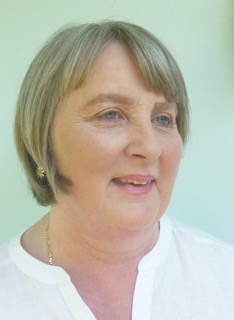
Guest feature: Q&A with Cynthia Jefferies on THE HONOURABLE LIFE OF THOMAS CHAYNE


'One of a novelist’s jobs is to reflect society and provoke thought. I hope I can do that, while also striving to entertain.'

The Outrageous Fortune of Abel Morgan, Cynthia Jefferies' first novel for adults, was published in 2018 and is reviewed here. Her follow-up, The Honourable Life of Thomas Chayne, is linked, developing a minor character from the first book. It has recently been published in hardback.

Writers Review: This novel is linked to your first, The Outrageous Fortune of Abel Morgan, though it pre-dates it. Was the idea for this story already taking shape in your mind as you finished the earlier one?

Cynthia Jefferies: I knew I would have liked to find out more about Ptolemy when I put him in the first book, because he only had a small role. Any more might have unbalanced the novel but he intrigued me. I had mentioned in The Outrageous Fortune  that he had never been able to settle after his experiences during the English Civil War. Why? What had it been like to live through that violent time? When it came to choosing a theme for the second book he was an obvious candidate, though I have Celia Rees to thank for the suggestion to base the second novel on a minor character.

WR:  Many writers find it difficult to strike the balance between authentic historical background and the demands of fiction. You evidently drew on many sources for information of the period - were there times when you felt overwhelmed by your research, or on the other hand did you find that it boosted your confidence?

CJ: It certainly boosted my confidence to have an idea of the realities of the period. On the other hand I was writing fiction, and that means leaving a lot out. I love the research, but believe strongly that too much detail can quickly make a good story collapse under the weight of facts. That’s not to say that I wanted to write an alternative history. I have been as accurate as I could, while not dwelling too much on the minutia. Likewise with the language. Little things like an enemy being pistoled instead of shot give a feeling of being in the period while not forcing the reader to wade through too much that is unfamiliar. Readers might learn things reading my fiction. I hope they do, but it’s not my job to educate. My job is to entertain, and also to offer something to think about.

WR: Was it always your intention to depict a son loyal to the King while the father sides with the Parliamentarians - did you ever consider having it the other way round?

CJ: I did think about it being the other way around but my interest in the storming of Cirencester led me to write it the way I did. Cirencester was an economically depressed wool town with plenty of reason to support parliament, although many surrounding landowners supported the king. I wanted to put Ptolemy in the position of having to attack a town and inhabitants he knew well. I wanted him, and the reader to be confronted with that terrible situation, so common in civil wars. However, I didn’t set out to make his father change sides. That came about through reading about the period and the way his father’s character developed.

WR: You've drawn extensively on the Civil War history of Gloucestershire, where you live. In your research, did you come across any chance finds or locations that became important in the story? And did you visit all the settings, e.g. Flint Castle?

CJ: I have some very useful street maps, and a facsimile of a map of the UK in the 17th Century. I find maps essential! In fact Flint Castle was a gem of a find when I was searching for somewhere in the north for Ptolemy and Richard to go. I drove up there with my eldest son and we spent a very rainy few days, looking at the ruins of Flint and other places mentioned nearby. The river doesn’t come to the walls any more, but you can see quite clearly how it did. I also stayed in Bristol overnight and spent two days walking about the streets. Being a flaneur (is there a feminine for that word?) is vital for me when researching a novel, so yes, I have visited everywhere. Living on the west coast of Scotland for a few years informed those locations. I have been to Oxford many times, and Norfolk too.

WR:  "When war comes in, morality becomes a poor relation." Why did you choose the title The Honourable Life ...  and do you want readers to question that during the course of the novel?

CJ: Actually the word 'honourable' was suggested by the publisher to complement 'outrageous' in the title of the first novel. I do though want readers to think about honour and morality within the story. Aphra makes Ptolemy think a little about slavery and women, but his is a 17th Century morality and he can’t see through our eyes. In addition, he does not have a naturally rebellious nature. He does like to think he is very honourable but he can also be naive.

WR: You seem to feel quite at home with 17th Century weaponry, battle strategies, domestic life, medicine and seafaring. Was any of this particularly daunting to write about?

CJ: Well I hope I did a reasonable job. It wasn’t usually daunting but occasionally I wanted to know something very specific and it could be tricky finding the information. Facts about doors on board ships of the time for instance. In the end I fudged that one, having found a sliding door on an earlier vessel, which gave me enough to work with. Fortunately, with fiction it’s usually possible to swerve around something one isn’t sure about, although I far prefer to know the truth.

WR:  The novel covers a vast span of time - from Thomas's birth to his fifties. How did you avoid any sense of hustling the reader forward?

CJ: Perhaps because I was so enjoying making the journey with him! I really don’t know, but am very glad you think it didn’t feel rushed. Writing in the first person has immediacy. It feels to me like having a conversation with the character. During a normal conversation we tend to leave out great swathes of ordinary life in order to describe the more interesting bits. I think what Ptolemy did while telling his story was to refer to the boring bits obliquely. For instance, his years in Bristol, building his career are mentioned a little in his letters to Aphra and as a backdrop to his visits home, but little is revealed of the day to day work, or of any specific friends he made. The years drift by, as they do in real life.

WR: So far you've chosen male perspectives as your viewpoint character. Did it just happen like this, or was it a deliberate choice?

CJ: I’ve been asked this many times and I’m still not sure of the answer! I think it’s too simplistic to say that men get all the best stories, and women are largely written out of history. Of course that is true, but I have no problem imagining strong female characters, or persuasive plots for them. For some reason I don’t understand, boys and men have always been my go-to main characters of choice, in spite of needing to write girls in much of my modern fiction for children. I know that I naturally write more comfortably as a man, although I’ve never been one! Sometimes I wonder if there’s something linking the male side of my brain with creating stories? Is that even possible? I have no idea. All I know is that whenever I start a story, I write a male character and have to deliberately bring in women as the plot develops. Whether my male characters are believable or not is a question I can’t answer!

WR:  What next - will you stay in the 17th Century, or are there other periods you're keen to explore?

CJ: To some extent that depends on what a publisher wants. There is more I want to say about the 17th Century, and oddly, considering my last answer, I have a woman’s story firmly in my head!

Apart from the 17th Century, which I find so interesting because it seems to be balanced on the cusp between medieval and modern history, I have also always been fascinated by ancient history. The Bronze Age Trojan war found Stone Age sling shot warriors acting as mercenaries. What did they think when they left their island and arrived at Troy with all the metal weapons there?

How new technology informs a community is so interesting. Man’s ingenuity has always been impressive. It’s one of the things that gives me any hope about our climate emergency. We have been lazy for many generations, plundering the wealth of our world because it was easy. Now we are having to think again. I look at the sudden explosion of manufactured vegan food on offer, the race towards cleanly produced electricity for transport because the demand is there. Inventors are excited about the need to be different. Meanwhile we can be taught and encouraged to be frugal, and to find pleasure in it. One of a novelist’s jobs is to reflect society and provoke thought. I hope I can do that, while also striving to entertain.

Thank you, Cynthia Jefferies, for answering our questions.

The Honourable Life of Thomas Chayne is published in hardback by Allison & Busby.

The Outrageous Fortune of Abel Moran is reviewed here.


Monday, 22 April 2019

Guest review by Cindy Jefferies: THIRTEEN MOONS by Charles Frazier


"So lyrically written that I was quite bereft when I got to the end..."


First published in 2001 for children, Cindy Jefferies found success with her Fame School series with Usborne Books. They obtained 19 foreign rights deals and are still in print in the UK. Latterly writing fiction for adults as Cynthia Jefferies, her first title The Outrageous Fortune of Abel Morgan was published in November 2018. It comes out in paperback in August 2019. At present she is working on another title for adults.


Charles Frazier’s first book, Cold Mountain, was a best seller on both sides of the Atlantic. His second, Thirteen Moons, came nine years later, and it shows. I have enormous respect for writers who take their time against exhortations by publishers, booksellers and readers. A novel takes its own time, or it should, but everyone needs to make a living, and that can work against our best endeavours. I have no idea precisely why Thirteen Moons took nine years, but I like to think that at least one of the reasons might be because he refused to be rushed.

The title refers to the way the First Nations people in the novel trace their seasons. Frazier educates us as to where we are in the year by way of these thirteen named moons. They quietly pace his novel, the life story of Will Cooper told in the first person. He is a bound boy at the start, a twelve year old orphan, sent alone to the edge of the Cherokee Nation to run a trading post.

For anyone who loves to read of the natural world this is a delight, and also a sadness, especially now, as we appreciate just how much damage we continue to do to the world.

In this wonderful novel we get vivid images of how people think about the land and its inhabitants. The buffalo and elk for example are long gone from the mountains and valleys, and the deer are far fewer, but none of the Cherokee in this novel speak of the numbers of skins they traded being a reason for the animals' demise, just of their vanishment, as if they have simply moved on. That made me think a lot about the balance of nature, and how outside forces offering manufactured goods to make life easier can make change almost impossible to resist.

The Cherokee are a huge influence on Will Cooper, and as a white man he works hard in many ways to protect their land and their way of life. The fate of the First Nations is a matter of history, and shame, and so of course he does not have a quiet life, but even during the worst of times, when violence comes, his story is told reflectively, in the voice of an old man thinking about the past. That voice is so persuasive I could almost believe I was sitting by the fire, listening to him in person.

I was completely captivated by Will Cooper. His loves, his behaviour good and bad, his humour, and wonderful descriptions of riding through the country in good weather and bad. He describes deep snow, thrashing rainstorms and hot sun. The names of places are wonderful, and the way the flora and fauna were used to support life is fascinating. In addition, it is all so lyrically written that I was quite bereft when I got to the end.

Thirteen Moons is published by Sceptre. 


Monday, 31 December 2018

READING AHEAD Part 2: what's in our sights?


More of our contributors - including some new faces to the blog - give us their reading choices. What was on their Christmas list? What have they been hoarding for a special treat? Old favourites, new publications, authors recently discovered ... 

As ever, a big thank you to our guests, thanks to whose generosity we post a new review every Monday. We hope you'll find something here to add to your own to-be-read pile.


Savita Kalhan: I am eagerly awaiting Crossfire by Malorie Blackman, the fifth book in the iconic Noughts and Crosses series, which is to be published next summer. The original series for children was inspired by political events and racial discrimination. Crossfire is no different. Brexit, Trump and the rise of the far right, have inspired Crossfire, and will no doubt spark discussions amongst teenagers and adults alike.

Can We All Be Feminists is a collection of essays by seventeen writers from diverse backgrounds. Listening to some of the essayists at a Waterstones’ event, and reading Eishar Kaur’s essay on the way home on the train highlights how slow change continues to be – she is writing as a third generation British Asian woman and I am second generation – and also how ‘feminism’ can mean radically different things according to your background, ethnicity and colour.


Hilary McKay: Helen Macdonald's H is for Hawk was my car book. I have car books, I’ve had them for years. Comes from the days of waiting with hot water bottles in the dark outside music lessons, party venues, gyms, schools, all those places that I don’t wait outside of anymore because the children are grown up(ish). So I’ve brought it into the warm, thing of beauty that it is, with that cover. That hawk. Now I’m two chapters in, and it’s as I guessed and as I’ve heard, long distance poetry. I have no fear of finishing it because I know already I’ll just turn to the beginning and start again.


Jon Appleton: A few years ago Paul Burston made the seamless transition from writing hilarious comedies to dark, searching crime fiction. I enjoyed The Black Path hugely so am looking forward to Paul’s creative exploration of the dark side of social media in The Closer I Get (Orenda Books, May). Paul is massively savvy about the online world so I’m sure his take will be insightful and persuasive and his story compelling.

I love it when Jill Dawson takes characters from real life and immerses them in turbulent semi-fictional scenarios - her next book, The Language of Birds (Sceptre, April) plunges us into the 1970s and the infamous disappearance of Lord Lucan. Can’t wait! In the meantime why not read The Crime Writer, her most recent novel which is about Patricia Highsmith? Chilling.


Leslie Wilson: I'm looking forward to reading The Pursuit of Power, Europe 1815-1914, by Richard J Evans. Evans is an author who I greatly esteem, because he has written about Nazi Germany in a dispassionate, enlightening and scholarly way. This book, however, deals with the period between Waterloo and the outbreak of World War 1, the era that my English and Silesian-German grandparents were born into (the latter part, anyway). There was so much going on during that period; the revolutions of 1848, the growth of cultural and political nationalism, colonialism, technological change, but also feminism and trade unionism. Can't wait.


Nick Manns: I caught Paul Broks on Radio 4 last Spring. From this fleeting hearing I gathered that he was a respected neuropsychologist, talking about the importance of magical thinking. The Darker the Night, the Brighter the Stars defies categorisation (so is every bookseller’s nightmare). Depending on where you jump in – and Broks is happy for readers to work through in any order – it’s autobiography, speculative philosophy, neuroscience, grief memoir and ghost story. It's also unsettling: “There is no clear dividing line in the brain between inner imaginings and perceptions of the real, solid ‘world out there’. Reality and fantasy are built into the same neural circuits." I’m about to reread it, letting into the house the quotidian, the strange, the dead.


Gwen Grant: A Place in the Woods, by Helen Hoover, is one of my most treasured books. Chicagoans Helen and her husband, Adrian, move to the vast forests on the edge of Minnesota’s northern wilderness. Helen’s deep love and respect for the forest and its wild inhabitants shines through as she shares the beauty and
danger of this world..

Environmentalists, they face many challenges. A violent storm almost destroys their cabin. Hunters appear. Their money runs out. Only when Helen starts to sell her detailed and lovely stories about the woods, illustrated with Ade’s beautiful pen and ink drawings, does the threat to their new life begin to lessen.


Chris Priestley: Having had the privilege of illustrating Jason Reynolds’ Long Way Down and hearing him speak at the Edinburgh Book Festival in August, I intend to work my way through his other books. I’m going to start with When I Was the Greatest. 

I am a big fan of the short story form as a writer and reader, but for some reason I’ve never got round to reading any Flannery O’Connor. I’m about to put that right with A Good Man Is Hard to Find. I also have Alice Munro’s Moons of Jupiter to look forward to.


Mary Hoffman: The book I am most looking forward to is Hilary Mantel’s The Mirror and the Light, whenever it comes out. I adored the first two, which I have read twice - and seen the stage plays and TV adaptation twice too. Meanwhile I am on the London Library's waiting list for Diarmaid MacCullough’s Thomas Cromwell: a Life, and I do have the 642 pages of Giles Tremlett’s Isabella of Castile: Europe’s first Great Queen, waiting by my bedside, for when I’ve finished Charles Ross’s Edward lV. Almost all my non-fiction reading is history these days. On the fiction front, I shall wait till Kate Atkinson’s Transcription comes out in paperback in March, since I don’t buy fiction in hardback (I make an exception for Hilary Mantel). Anne Tyler’s Clock Dance isn’t available till July next year but Madeleine Miller’s Circe is on my Christmas list. 


Paul Dowswell: Francis Spufford’s Golden Hill is now on my ‘read again pile’, and I’m happy to recommend it to anyone looking for a riveting read. Spufford’s tale, of a young man recently arrived in colonial New York with an exceedingly large cheque, is a glorious cinematic, smell-o-vision adventure. I can’t remember the last time I read a book I could see so clearly in my mind’s eye. Benedict Cumberbatch, Tom Wilkinson and Oona Chaplin strutted the stage and read the pages for me. Spufford teaches creative writing at Goldsmiths. If he teaches half as well as he writes they are very lucky to have him.


Patricia Elliott: Rosie, the wonderful writer Rose Tremain's memories of growing up in sooty post-war London, with school holidays spent at the country paradise of Linkenholt, her grandparents' home, is both delightful and disturbing. Her father deserts the family when Rose is ten. Her bleak childhood, dominated by her cold, unkind mother, is alleviated only by her loving nanny, and by teachers who encourage her creativity when she is banished to boarding school so her mother can marry a new man. Only after being 'finished' in France, does she finally rebel and escape to Oxford. Some of the most interesting parts refer to incidents that have inspired her novels.


Cynthia Jefferies: Having recently discovered the British Library Crime Classics, what better title to choose for Christmas reading than J.Jefferson Farjeon’s Mystery in White, his Christmas Crime story? First published in 1937 it has an evocative cover complete with deep snow, stars twinkling and a steam train stuck in a snow drift. Four murders in a dozen hours! I reckon I’ve earned my bit of turkey. So says the police inspector, belatedly arriving at the scene. Eleanor Farjeon’s brother was prolific so I will be looking out for more. I love crime within this period a lot, almost enough to try it myself!


Sheena Wilkinson: Christmas is a time for old friends. This year Linda Newbery’s The Key to Flambards sent me back to K.M. Peyton’s originals. My own work in progress is set in 1921, so revisiting the post-war atmosphere of Flambards Divided is fascinating– though my book is set in Belfast which had its mind on things other than horses and racing cars. I’ve recently loved Kate Atkinson’s Transcription, and I hear there’s a new Jackson Brodie on the horizon next year. So that has settled my Christmas reading – a leisurely reread of the first four Jackson Brodie books to get me in the mood.


Linda Newbery:  I keep seeing clips and mentions of Chimamanda Ngozi Adichie (not least interviewing Michelle Obama at the Festival Hall!) and am impressed by everything she says.  Americanah, a story of two returned Nigerian exiles, former lovers, sounds enticing - and I've just seen that Barack Obama has chosen it as one of his books of the year, too. Having been gripped by Michelle Paver's chilling Dark Matter, I've now got Thin Air, a ghost story set in the Himalayas in the 1930s. And I have high expectations of The Binding, a first adult novel by Bridget Collins, known for her bold and accomplished teenage fiction. We'll hear more about this for sure, and just look at that sumptuous cover!


Finally here is Bridget herself, who'll be a January guest:

Bridget Collins: I’m really looking forward to re-reading Naomi Novik’s Spinning Silver. It’s a
Photo: Symon Hamer
brilliant, immersive reworking of the Rumpelstiltskin story, with wonderfully rich world-building and great characters. The images that stay with me are so beautiful (think silver, ice, dissolving mirrors, silk) that I can’t wait to rediscover them. The first time I read it I just devoured it – but then, because it was so in demand, I had to give it straight back to the library! So I’m going to buy it and go more slowly this time, relishing every word.


Monday, 19 November 2018

Guest review by Yvonne Coppard: THE OUTRAGEOUS FORTUNE OF ABEL MORGAN by Cynthia Jefferies


"Two narrative strands that together weave a heart-wrenching, epic story ..."


Yvonne Coppard is a writer of children’s fiction, non-fiction for adults and occasional columns and articles in a variety of publications. She is currently a Writing Fellow of the Royal Literary Fund, working with businesses and public service organisations to promote clear, understandable English in written communication. See more on her website.

In 1660 Christopher Morgan returns from war and exile in Europe to reunite with his wife and start a new life in rural England. But his hopes for the future are blighted by events that leave him bereaved, impoverished and struggling to care for his young son, Abel. Christopher becomes reluctantly complicit in the activities of a violent and unscrupulous smuggler, Daniel Johnson. Eventually, he finds the strength to take a stand against Daniel: soon afterwards, Abel goes missing.

Here the novel divides into two narrative strands that together weave a heart-wrenching, epic story following the fortunes of Christopher and Abel through the years and across the world. Christopher searches relentlessly for his son. A false lead takes him to Constantinople, where he rescues a young Irish slave boy from a terrible fate but does not find any clue to his own son’s whereabouts. Meanwhile, Abel believes that his father is dead and that he has no-one left who cares about him. Enslaved, first to a fisherman and then sold on to a pirate ship, Abel embraces the pirate life and concentrates on survival, whatever the cost. He eventually gains freedom and fortune and settles in Jamaica. He has learned to concentrate on his own survival, whatever the cost to his soul and spirit.

The historical settings for all the locations have been well-researched. Constantinople comes to life so vividly, you can almost smell and taste it. The tale is often dark, but the pace has light and shade and the main characters are convincing and worth the reader’s investment. More than once, Christopher comes tantalisingly close to finding Abel, but is thwarted by timing or circumstance. Both characters lurch from one peril to another; time and again they are beaten down by fate and circumstance. They are forced to battle with malevolent forces, both within themselves and without. And yet they rise, and rise again, finding unexpected crumbs of kindness or an extended hand from a stranger, even in the cruellest of circumstances. The reader’s hope is never quite lost.

There are many satisfying themes in this novel for those who seek them. Love and loss, the compulsion to connect; the fragility of moral integrity under pressure; the possibility of redemption and the triumph of the human spirit over unspeakable odds are among them. But most of all this is a refreshingly old fashioned, action-packed historical story.

The Outrageous Fortune of Abel Morgan is published by Allison and Busby.