


What have our guest reviewers most enjoyed this year? Here's the first of two round-up features. Unlike those you see in the broadsheets, ours include books published at any time, not just this year - so selections, over the two posts, range from Marcus Aurelius to Pussy Riot. Big thanks to our impressive line-up of guests (and we have plenty more to come) - WRITERS REVIEW couldn't happen without them. Come back next week for more recommendations!
KEREN DAVID:

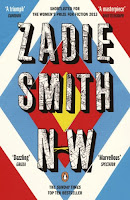
Reading NW by Zadie Smith was like a masterclass in how to write voice. Four narrators tell an overlapping story of life and death in London, each one utterly distinct and completely convincing, brilliantly understood and observed. If I could write a book a tenth as good as this, I'd be satisfied forever.

Troublemakers by Catherine Barter was my favourite YA book of the year. Like NW it's an account of contemporary London life that feels authentic and real, there's a cast of diverse likeable characters and questions of ethics and family to engage head and heart. I read it once, and then went back to the beginning and read it all over again.
 I've chosen two fantastic crime metafictions: Anthony Horowitz's The Word is Murder is crime fiction with a difference, this bold and brilliant tour de force by a master storyteller takes big risks with literary conventions and reader expectations, and pulls it off triumphantly.

 My second choice is Sulari Gentill's Crossing the Lines. Known for her popular Rowland Sinclair series of detective mysteries set in 1930's Sydney, Australian author Sulari Gentill has broken new ground with this novel, a haunting exploration, through the lens of a crime story, of creative process.
PAUL MAGRS:

Pierre Gripari's anarchic and strange fairy tales included The Witch in the Broom Cupboard published by Pushkin Press. The children who lived in his street in Paris' Latin Quarter and hung around the same coffee bar helped him compile this book in the 1960s and it's only recently been translated.
Also, the autobiographical essays by Bob Smith, Treehab, published by the University of Wisconsin Press, are harrowing and beautiful and hilarious. He talks about life with illness, having children, loving the natural world, and having hot dates in cold Alaska.


My novel of the year must be Rachel Joyce's life-affirming The Music Shop. It's got a lovely ensemble cast and goes in just the directions it bloody-mindedly wants to. Every book of hers I love - each one even more than the last.
ANN TURNBULL:
 The Meditations of Marcus Aurelius. I was given this as a beautiful little hardback (only 6” x 4” - Collector’s Library 2011, translated by A. S. L. Farquharson) last Christmas. I’ve been reading it in snippets ever since and have just finished. It’s extraordinary how fresh and modern the thoughts of this Roman emperor are today. Marcus Aurelius urges kindness and attention to duty. He puts you in your place in time and the cosmos, reflects on how brief all human life is and how pointless it is to worry about death, wealth or reputation, since the span of all our lives is infinitesimal.


CAROLINE PITCHER:
 The last poem in the late Helen Dunmore's Inside the Wave has the startling, moving image of Death as the mother welcoming her dying child. The collection is of spare, lyrical, eloquent poems set in the borderline between the living and the dead, for:


Troublemakers by Catherine Barter was my favourite YA book of the year. Like NW it's an account of contemporary London life that feels authentic and real, there's a cast of diverse likeable characters and questions of ethics and family to engage head and heart. I read it once, and then went back to the beginning and read it all over again.
PAUL DOWSWELL:
 Svetlana Alexievich’s The Unwomanly Face of War (Penguin Classics) A harrowing but deeply moving tribute to the Russian women who fought in The Great Patriotic War. ‘Mama waited at the station for several days to see us transported,’ says Tatyana. ‘She saw us going to the train, gave me a pie and a dozen eggs, and fainted…’


Hayley Long’s The Nearest Faraway Place (Hot Key) Despite all the ‘celebrity’ novelist nonsense currently afflicting children’s publishing, it’s heartening to see a YA novel as heartfelt and beautifully written as this still being launched into the world.
BALI RAI:
 Zana Fraillon's The Bone Sparrow: timely, powerful and heartbreaking, this story cuts deep. And in Subhi, the author has created an unforgettable narrator whose voice we must hear. An outstanding story that is rightly acclaimed.


Kit de Waal's My Name Is Leon is moving, unflinchingly authentic and brilliant. It gives voice to the unheard British underclass, in a poignant story that lays bare the social inequalities of the 1980s. A superb debut novel.
SOPHIE MASSON:


Hayley Long’s The Nearest Faraway Place (Hot Key) Despite all the ‘celebrity’ novelist nonsense currently afflicting children’s publishing, it’s heartening to see a YA novel as heartfelt and beautifully written as this still being launched into the world.
BALI RAI:


Kit de Waal's My Name Is Leon is moving, unflinchingly authentic and brilliant. It gives voice to the unheard British underclass, in a poignant story that lays bare the social inequalities of the 1980s. A superb debut novel.
SOPHIE MASSON:
 I've chosen two fantastic crime metafictions: Anthony Horowitz's The Word is Murder is crime fiction with a difference, this bold and brilliant tour de force by a master storyteller takes big risks with literary conventions and reader expectations, and pulls it off triumphantly.

PAUL MAGRS:

Pierre Gripari's anarchic and strange fairy tales included The Witch in the Broom Cupboard published by Pushkin Press. The children who lived in his street in Paris' Latin Quarter and hung around the same coffee bar helped him compile this book in the 1960s and it's only recently been translated.
Also, the autobiographical essays by Bob Smith, Treehab, published by the University of Wisconsin Press, are harrowing and beautiful and hilarious. He talks about life with illness, having children, loving the natural world, and having hot dates in cold Alaska.


My novel of the year must be Rachel Joyce's life-affirming The Music Shop. It's got a lovely ensemble cast and goes in just the directions it bloody-mindedly wants to. Every book of hers I love - each one even more than the last.
ANN TURNBULL:


The Kevin and Sadie stories, by Joan Lingard, were first published in the 1970s by Puffin. Across the Barricades and The Twelfth Day of July can be obtained second-hand or as e-books, and now Kevin and Sadie: the Story Continues is available (in print; no e-book). I came across the second book in this series of five and was instantly gripped by its story of life in Belfast during the Troubles. Then I got the first book on Kindle. Finally I tracked down a bind-up of the last three, and gobbled up the rest of the saga, which is about Kevin and Sadie’s time in England, where they get married, have a baby and struggle to keep a home. Wonderful, lovable, engaging characters from a first-rate storyteller. For readers of 11 or over.

Who would have thought that pain
And weakness had such gifts
Hidden in their rough hearts?
Hidden in their rough hearts?


I've found the smack-in-the-face titles of `psychological best-sellers' easy to confuse and the novels often disappointing, but was gripped by Sabine Durrant's Lie With Me. Creepy, deceitful Paul won me over and his ghastly `friends', the manipulative teenagers and the particular kind of Greek holiday resort were utterly convincing.
LINDA SARGENT:
 Daemon Voices by Philip Pullman. A collection of thirty plus essays on storytelling, utterly compelling and should be essential reading for every aspiring artist. In the author’s words, “if something doesn’t help, it’ll hinder”: this helps – and inspires.


LINDA SARGENT:


Wolf Hollow by Lauren Wolk. Set in 1940s rural America, this is a story of the far-reaching damage wrought by war and its effects across the generations, with a wonderfully drawn young main protagonist. Full of compassion and completely gripping: I didn’t want it to end! I also highly recommend her second book, Beyond the Bright Sea.
JON APPLETON:
 So many authors are reinventing themselves under new guises. I’d hate for people to forget that William Brodrick is the author of a handful of brilliant P.D.Jamesian/Ellis Petersish novels about Brother Anselm (see The Discourtesy of Death), but I was delighted to meet his new incarnation as John Fairfax, who is writing about William Benson, an ex-con turned lawyer. Summary Justice (Abacus) is a brilliant, memorable crime novel - can’t wait for next year’s instalment.


A lot of people wouldn’t lament a lack of comedies about middle-aged male writers, but I’d be very sad to be without Less by Andrew Sean Greer (Little Brown US). Approaching fifty, Arthur Less travels the world to avoid, mostly, himself. There are some wonderful comments on being mid-list in publishing and possibly in life, in this very human, humane novel. I hope it’s published in the UK very soon.
NICOLA MORGAN:
 My top reads this year have been Human Acts by Han Kang (brutal student uprising of 1980 in South Korea), A God in Ruins by Kate Atkinson (humans wrecked by a combination of WW2 and being human - full review coming early next year), Days Without End by Sebastian Barry (more brutality - sorry - this time in the massacres of native Americans after the US Civil War) and Small Great Things by Jodi Picoult (who pulled off the incredible feat of making me feel brief sympathy for a deeply repellent white supremacist). Great plots, big emotions - just what I need.
JON APPLETON:


A lot of people wouldn’t lament a lack of comedies about middle-aged male writers, but I’d be very sad to be without Less by Andrew Sean Greer (Little Brown US). Approaching fifty, Arthur Less travels the world to avoid, mostly, himself. There are some wonderful comments on being mid-list in publishing and possibly in life, in this very human, humane novel. I hope it’s published in the UK very soon.
NICOLA MORGAN:
 My top reads this year have been Human Acts by Han Kang (brutal student uprising of 1980 in South Korea), A God in Ruins by Kate Atkinson (humans wrecked by a combination of WW2 and being human - full review coming early next year), Days Without End by Sebastian Barry (more brutality - sorry - this time in the massacres of native Americans after the US Civil War) and Small Great Things by Jodi Picoult (who pulled off the incredible feat of making me feel brief sympathy for a deeply repellent white supremacist). Great plots, big emotions - just what I need.

JOCELYN FERGUSON:
 I absolutely loved The Goldfinch by Donna Tartt. I always look forward to new work by her. She never disappoints!
PATRICIA ELLIOTT:


Natasha Pulley's The Watchmaker of Filigree Street, about the extraordinary, intertwined relationships in the Victorian era between a quiet telegrapher in the Home Office, a brilliant and mysterious Japanese clockwork maker and a young female physicist, with its mixture of history and fantasy and its deeper themes about human destination, is different and on the whole delightful. It could do with cutting and its charm almost tips over into whimsy at times, but I love its exuberant and inventive writing.
LESLIE WILSON:
 The Cutting Season, by Attica Locke, is an exciting, thought-provoking thriller; the black heroine/investigator works at a historic plantation house in Louisiana. The plot revolves as much round Caren's feelings about working at this place where her ancestors were slaves as about the issue of who's the murderer, though you do find that out, and the ending is perfect.

Little Dorrit, by Charles Dickens. What is disturbing about this book is how relevant it is to nowadays; financial instability, the gulf between rich and poor, and a corrupt government, embodied in the Circumlocution Office, which exists to shore up the status quo of privilege. Dickens may have been terrible at writing about women, but he's an amazing, surreal storyteller.
What have you most enjoyed this year? What would you like to recommend? Please leave your comments below.

